No Vaccine, High Fatality, Borders Crossed: The Bundibugyo Ebola Outbreak in the Democratic Republic of the Congo
An in-depth analysis of the second-largest Ebola outbreak on record: more than 9,000 confirmed Bundibugyo virus cases in the DRC, a case fatality ratio near 48%, cross-border spread and no approved vaccine.
Key Figures at a Glance
| Confirmed cases (DRC, ~11–13 Oct) | ~9,066 |
|---|---|
| Confirmed deaths | ~4,381 (CFR ≈ 48.3%) |
| WHO data (as of 6 Oct) | 8,728 cases / 4,205 deaths (CFR 48.2%) |
| Geographic spread | 7 provinces, 64–65 health zones; Ituri epicenter |
| Cross-border | Kenya (1 confirmed death), Uganda (~20 cases earlier), France (1 earlier) |
| Vaccine / treatment | No approved vaccine or specific treatment for Bundibugyo strain |
In the forests and conflict-scarred towns of eastern Democratic Republic of the Congo, a virus that most of the world had largely forgotten is writing one of the deadliest chapters in modern outbreak history. The Bundibugyo strain of Ebola, declared in mid-May 2026, has now surpassed 9,000 confirmed cases and more than 4,300 deaths according to Congolese health authorities. It is the largest and deadliest Ebola outbreak the country has ever recorded, and the second-largest globally after the 2014–2016 West African epidemic.
A Different Strain, a Different Challenge
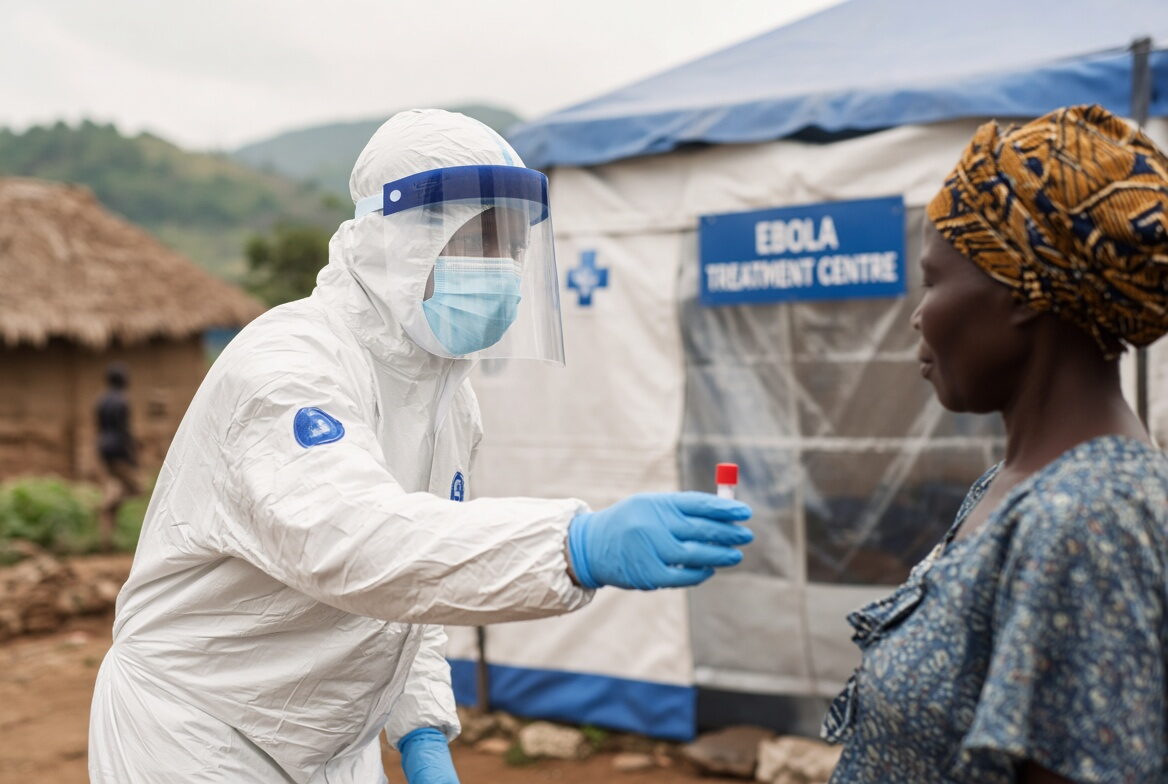
Unlike the Zaire ebolavirus that dominated previous major outbreaks and for which an effective vaccine (Ervebo) exists, Bundibugyo virus disease (BVD) currently has no approved vaccine and no specific licensed treatment. Supportive care remains the mainstay. This biological difference has profound operational consequences: ring vaccination strategies that proved decisive in earlier DRC outbreaks cannot be deployed at scale, and health workers must rely on infection prevention, early isolation, and clinical management while trials are prepared.
WHO declared the outbreak a Public Health Emergency of International Concern on 17 May 2026. Africa CDC followed with a continental emergency declaration the next day. Transmission accelerated with unusual speed: the outbreak crossed 1,000 confirmed cases within roughly 40 days of response activation—far faster than the 2018–2020 DRC outbreak, which took about 235 days to reach the same milestone.
Where the Virus Is Moving
Ituri province remains the epicenter, accounting for the large majority of cases (roughly three-quarters in recent tallies). North Kivu has recorded the highest provincial case fatality rate, approaching 58% in some reports. Cases have been confirmed across seven provinces and more than 60 health zones. High population mobility, porous borders, and the presence of armed groups have repeatedly interrupted contact tracing and safe burial teams.
Cross-border spread has already occurred. Uganda reported approximately 20 confirmed cases earlier in the year before its outbreak was declared over. In early October, Kenya confirmed its first imported case—a Congolese-resident Kenyan citizen who traveled through Uganda and died in Nairobi. Contact tracing was activated immediately. Earlier, an imported case was also reported in France. These events illustrate both the virus’s capacity to move with people and the importance of regional surveillance systems.
Why Mortality Remains Stubbornly High
A crude case fatality ratio hovering around 48% is higher than many expected for Bundibugyo and reflects operational realities as much as viral virulence. A substantial proportion of deaths continue to occur in the community rather than in treatment centers. This pattern points to delayed care-seeking, limited trust in the response, and gaps in early detection. In recent weeks, WHO noted that of hundreds of new deaths, the majority still took place outside facilities.
Community mistrust has been a recurring obstacle. Some residents view the outbreak response as an opportunity for officials to divert resources. Incidents of violence against responders and the destruction of infrastructure (including a transit center in Ituri) have further complicated containment. At the same time, the response is operating against the backdrop of a large concurrent cholera outbreak that has already claimed thousands of lives in the same regions since 2025.
The Response and Emerging Tools
Health authorities and partners have expanded isolation capacity, deployed mobile laboratories, and strengthened safe and dignified burial protocols. Contact follow-up rates have fluctuated but remained a critical bottleneck. Frontline workers have begun receiving the Ervebo vaccine under research or compassionate-use protocols, even though its efficacy against Bundibugyo is unknown.
A clinical trial specifically evaluating vaccine efficacy against the Bundibugyo strain is in advanced preparation, with WHO officials indicating it could begin in the DRC in the coming weeks. Until results are available, however, the operational toolbox remains limited compared with recent Zaire outbreaks.
Broader Implications
This outbreak arrives at a moment of strained global health financing. Aid reductions in several donor countries are already affecting HIV programs and fragile-state health systems. Concurrently, the United Nations recently adopted a political declaration on pandemic prevention, preparedness, and response—though without full consensus and with the critical Pathogen Access and Benefit-Sharing annex still unfinished. The Bundibugyo experience underscores how quickly a strain without medical countermeasures can overwhelm even experienced response systems when security, trust, and logistics are constrained.
For global health security, the episode highlights three persistent needs: faster development of strain-specific or pan-filovirus vaccines and therapeutics; sustained investment in surveillance and community engagement in conflict-affected settings; and more predictable financing that does not collapse when political priorities shift. The WHO Pandemic Hub’s recently announced ambition to detect new outbreaks within 24 hours by 2030 is a direct recognition of these gaps.
Looking Ahead
Numbers continue to rise. Daily reports still show dozens of new confirmed cases, concentrated in Ituri and North Kivu. Whether transmission can be bent downward will depend on improving the proportion of cases that reach care early, maintaining contact tracing despite insecurity, and successfully launching the planned vaccine trial. Until then, the outbreak remains both a humanitarian emergency and a live test of the international community’s ability to respond to a high-consequence pathogen for which no ready countermeasure exists.
The story of Bundibugyo in the DRC is not only about one virus in one country. It is about the distance between the tools science has developed and the conditions in which those tools must actually be used—and about how thin the margin of safety remains when that distance is large.
Sources and Notes
Data drawn primarily from WHO Disease Outbreak News (including updates through early October 2026), Democratic Republic of the Congo Ministry of Health and National Institute of Public Health situation reports (mid-October figures), Africa CDC briefings, and contemporaneous reporting by Reuters, Al Jazeera, and Contagion Live. Case and death counts are fluid; figures cited reflect the most recent publicly available confirmed numbers as of mid-October 2026. Case fatality ratios are crude and may shift with improved ascertainment and care.
This analysis is prepared for educational and informational purposes for globaldocshub.com. It synthesizes publicly available official data and does not constitute medical or operational advice.