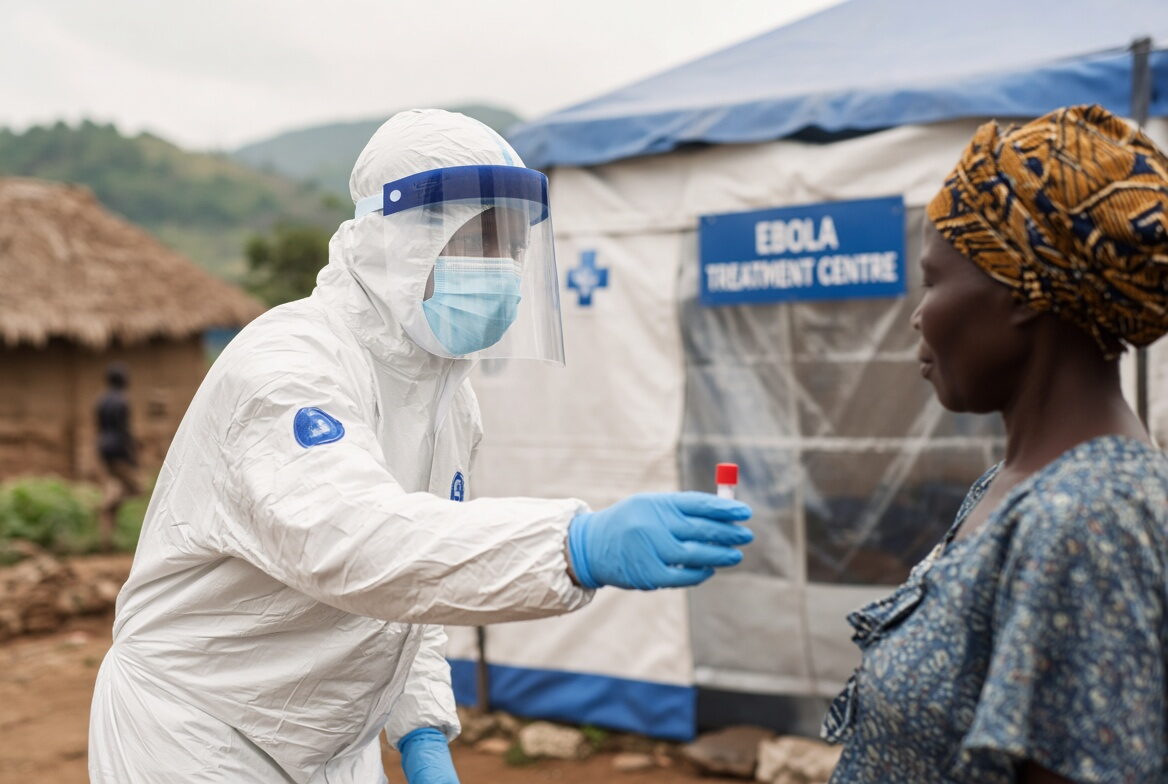
The 34-Million Health Worker Gap: How the World’s Health Workforce Shortage Threatens Universal Coverage
Findings from the Global Burden of Disease study: the world needs 34.4 million more doctors, nurses, midwives, dentists and pharmacists to reach moderate universal health coverage, with the largest gaps in South Asia and sub-Saharan Africa.
The Shortage by Cadre
| Cadre | Additional workers needed |
|---|---|
| Nurses and midwives | 23.9 million |
| Doctors | 7.1 million |
| Dentists | 1.8 million |
| Pharmacists | 1.6 million |
| Total additional needed | 34.4 million |
Source: IHME / Lancet Public Health analysis for the Global Burden of Disease Study 2023. Threshold: 80/100 on the UHC effective coverage index.
Between 1990 and 2023 the global health workforce nearly tripled, rising from 40.9 million to 122.1 million workers. Women drove most of that expansion, accounting for roughly 70 percent of the increase and now representing about 69 percent of the total workforce. Yet a comprehensive analysis published in The Lancet Public Health concludes that the world still needs an additional 34.4 million doctors, nurses, midwives, dentists and pharmacists to reach even moderate levels of universal health coverage.
Where the Gaps Are Largest
The shortfall is not evenly distributed. South Asia faces the largest absolute deficits, requiring an estimated additional 2.6 million doctors and 10 million nurses and midwives. Sub-Saharan Africa also shows severe shortages: nursing density there averages 14.5 per 10,000 population, compared with 121.8 per 10,000 in high-income countries. At the extreme, nurse density falls as low as 3.2 per 10,000 in Chad and 3.3 in Madagascar, versus 171.7 in Belgium and 161.4 in the United States.
The study estimates the minimum densities associated with a score of 80 out of 100 on the Global Burden of Disease universal health coverage effective coverage index: approximately 23.8 doctors and 64.5 nurses and midwives per 10,000 population, plus 5.2 dentists and 5.6 pharmacists. Many countries remain well below these thresholds.
Women in the Workforce, Unevenly Positioned
Women account for the large majority of nurses and a substantial share of the overall workforce, yet they remain concentrated in roles that typically offer lower pay and fewer pathways into senior clinical leadership and management. Of the 81.2 million additional health workers added since 1990, 71.4 percent were women. The growth has therefore expanded capacity while also reinforcing existing gender patterns in career progression and decision-making authority.
Different Estimates, Same Direction
The 34.4 million figure is higher than some WHO projections, which have used different thresholds and included a broader set of occupations. WHO’s more recent global strategy updates have pointed to a projected shortage on the order of 11 million health workers by 2030 under certain assumptions. The higher IHME estimate reflects a more ambitious coverage target (a UHC effective coverage score of 80). Both analyses agree, however, that nursing shortages constitute the largest single component of the gap and that the greatest absolute needs are concentrated in South Asia and parts of sub-Saharan Africa.
What the Numbers Imply
Closing even a portion of the 34.4 million gap requires more than training additional graduates. Retention, working conditions, remuneration, distribution within countries, and the ability of health systems to employ and support new workers all matter. Migration further complicates the picture: high-income countries continue to recruit from lower-density regions, amplifying shortages where needs are already greatest. Gender-responsive policies that improve career progression for women, who form the backbone of the nursing workforce, are also necessary if the expansion is to be sustainable.
The analysis underscores that universal health coverage remains constrained less by the absence of technical knowledge than by the simple presence of enough trained people in the right places. Until the density of nurses, doctors and other cadres rises substantially in the regions that currently lag, the goal of essential services without financial hardship will stay out of reach for large populations.
Conclusion
The near-tripling of the global health workforce over three decades is a genuine achievement, driven largely by women. It has not, however, closed the distance to moderate universal health coverage. An additional 34.4 million workers—most of them nurses and midwives—are still required. The distribution of that gap, the gender dynamics within the workforce, and the difference between ambitious and more pragmatic shortage estimates all point to the same practical challenge: training, employing and retaining health workers where the need is greatest, under conditions that make long-term careers possible.
Sources and Notes
Primary source: Measuring the composition and availability of human resources for health by sex in 204 countries and territories, 1990–2023, and workforce gaps for universal health coverage: a systematic analysis for the Global Burden of Disease Study 2023, The Lancet Public Health (2026). Supporting context from IHME summaries, WHO health workforce reporting, and related coverage. Shortage figures refer to the threshold of 80/100 on the UHC effective coverage index for the four cadres listed. Estimates are subject to data limitations and modelling uncertainty.
This analysis is prepared for educational and informational purposes for globaldocshub.com. It synthesises publicly available research and does not constitute policy advice.