153 Yes, 3 No: What the UN Pandemic Declaration Reveals About Global Health Politics in 2026
An analysis of the political declaration on pandemic prevention, preparedness and response adopted by the UN General Assembly on 12 October 2026 by 153 votes to 3, and the unfinished Pathogen Access and Benefit-Sharing annex.

The Vote at a Glance
| In Favour | Against | Abstentions |
|---|---|---|
| 153 | 3 | 2 |
Against: United States, Israel, Argentina. Abstentions: New Zealand, Paraguay. Declaration is political and non-binding.
On 12 October 2026 the United Nations General Assembly adopted a political declaration on pandemic prevention, preparedness and response by 153 votes to 3. The text had been expected to pass by consensus at the High-Level Meeting on 25 September, but objections forced it to a recorded vote. The outcome is both a clear majority affirmation of multilateral cooperation and a public demonstration of the political fractures that still surround global health security.
What the Declaration Actually Contains
The 64-clause document reaffirms that pandemic readiness depends on resilient health systems anchored in universal health coverage and primary health care. It welcomes the WHO Pandemic Agreement adopted in 2025 and the amendments to the International Health Regulations (2005). It calls for stronger surveillance, One Health approaches that address drivers of outbreaks at source, equity in access to vaccines, diagnostics and treatments, and tools available within the first 100 days of a pandemic threat.
It also highlights a persistent financing problem: an estimated annual gap of US$15 billion in pandemic preparedness funding, with existing arrangements described as fragmented, underfunded and overly reliant on development assistance. The declaration urges expanded local and regional manufacturing capacity and timely pathogen access and benefit-sharing.
The Unfinished Business: Pathogen Access and Benefit-Sharing
The most consequential gap is not inside the declaration itself but beside it. The WHO Pandemic Agreement cannot be opened for signature until Member States finalise the Pathogen Access and Benefit-Sharing (PABS) annex. Under the envisaged system, countries that share pathogen samples and genetic sequence data would receive a share of any resulting vaccines, treatments and diagnostics. Negotiations have stalled between developing-country coalitions and some high-income states (including the United States and several European nations) over the precise terms of access, intellectual-property flexibilities and sovereignty concerns.
WHO Director-General Tedros Adhanom Ghebreyesus welcomed the General Assembly vote but immediately tied its value to completing the PABS annex so the Pandemic Agreement can enter into force as international law. Without that step, the political declaration remains an expression of intent rather than a completed legal architecture.
Why Three Countries Voted No
The United States, Israel and Argentina were the only votes against. The U.S. delegation has cited concerns about “divisive ideologies” and the linkage of pathogen sharing to benefit-sharing mechanisms, arguing that such linkage could impede rapid cooperation during an active outbreak. Argentina’s vote aligns with its broader foreign-policy positioning under the current administration. Several EU members supported the text while distancing themselves from language on technology transfer and intellectual-property flexibilities under World Trade Organization rules.
Context and Implications
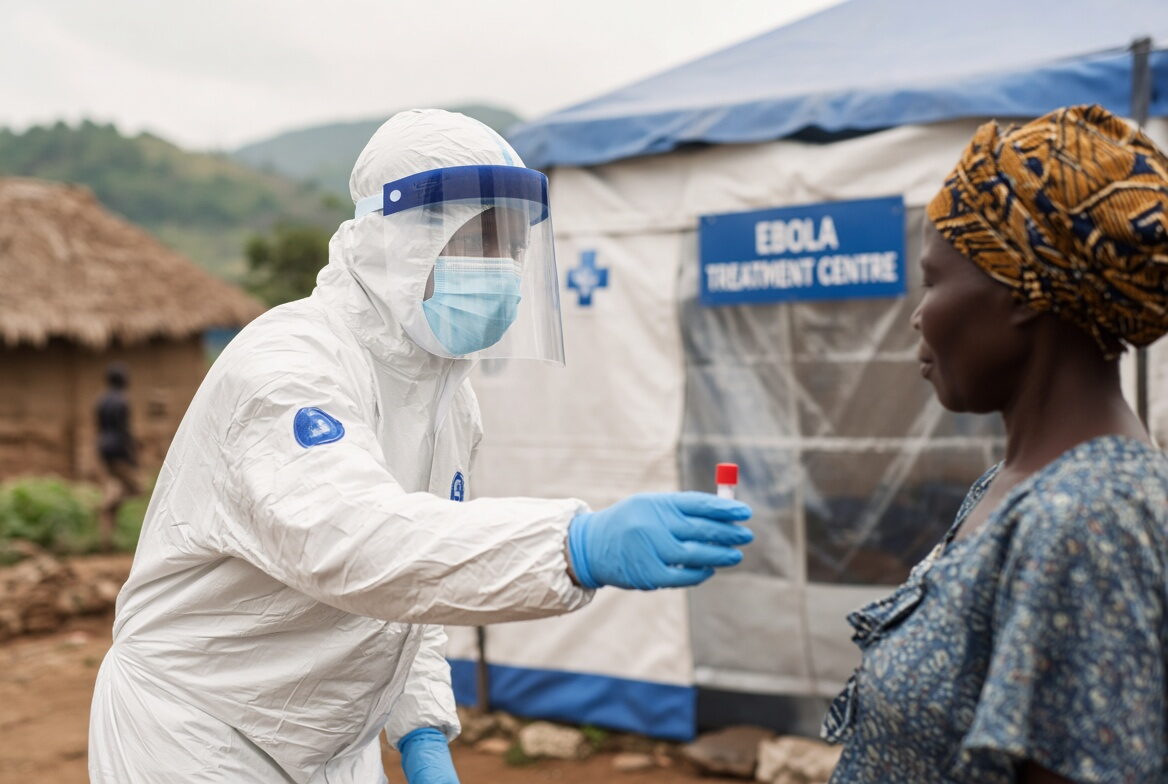
The declaration arrives while the Democratic Republic of the Congo is managing the second-largest Ebola outbreak on record (Bundibugyo strain, no approved vaccine) and while multiple fragile states face concurrent outbreaks and declining external health financing. It also follows the launch of the WHO Pandemic Hub’s new strategy aiming for 24-hour outbreak detection capacity by 2030.
Critics, including the Friends of the High-Level Meeting, note that the declaration contains few concrete, measurable or time-bound commitments. Its practical value will depend on whether governments translate the broad language into domestic investment, complete the PABS negotiations, and sustain financing that does not collapse when political priorities shift. For now, the vote records both the breadth of formal support for multilateral pandemic preparedness and the limits of that consensus.
Conclusion
The 153–3 vote is a political fact, not a finished system. It shows that most of the world still prefers collective rules for pandemic threats, even as a small number of states reject the current formulation and a critical annex remains unfinished. Whether the declaration becomes a meaningful step or another non-binding text will be decided in the coming months of PABS negotiations and in the budgets governments actually allocate.
Sources and Notes
Based on the UN General Assembly vote of 12 October 2026 (draft resolution A/81/L.6), official UN News reporting, WHO statements of 12 October 2026, Health Policy Watch, The BMJ, and the text of the political declaration. The declaration is political and non-binding. PABS annex negotiations remain ongoing as of mid-October 2026.
This analysis is prepared for educational and informational purposes for globaldocshub.com. It synthesises publicly available official documents and does not constitute legal or policy advice.